
Transporting OSPs for a flagship windfarm in Moray West
Project info:
Companies Involved
Ocean Winds
Origin
Newcastle Upon Tyne
Destination
Moray West
Weight
1400 tons
Distance
300 Miles
Moray West Windfarm
Moray West is an offshore windfarm, located off the coast of eastern Scotland. It’s a flagship initiative in the renewable energy sector, which will substantially increase the region’s renewable energy capacity.
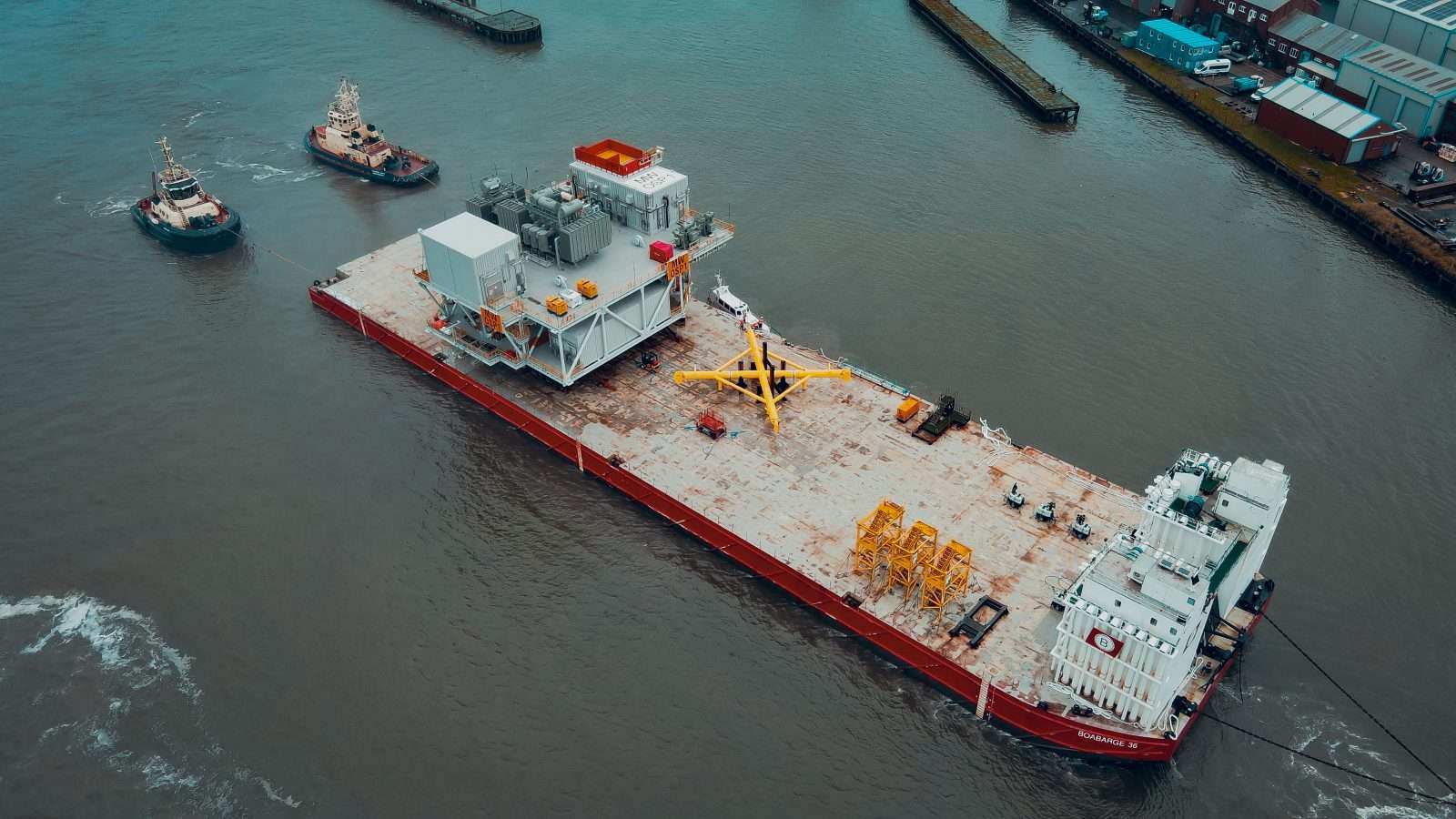
We were appointed by Moray Offshore Windfarm (West) Ltd to transport two offshore substation platforms
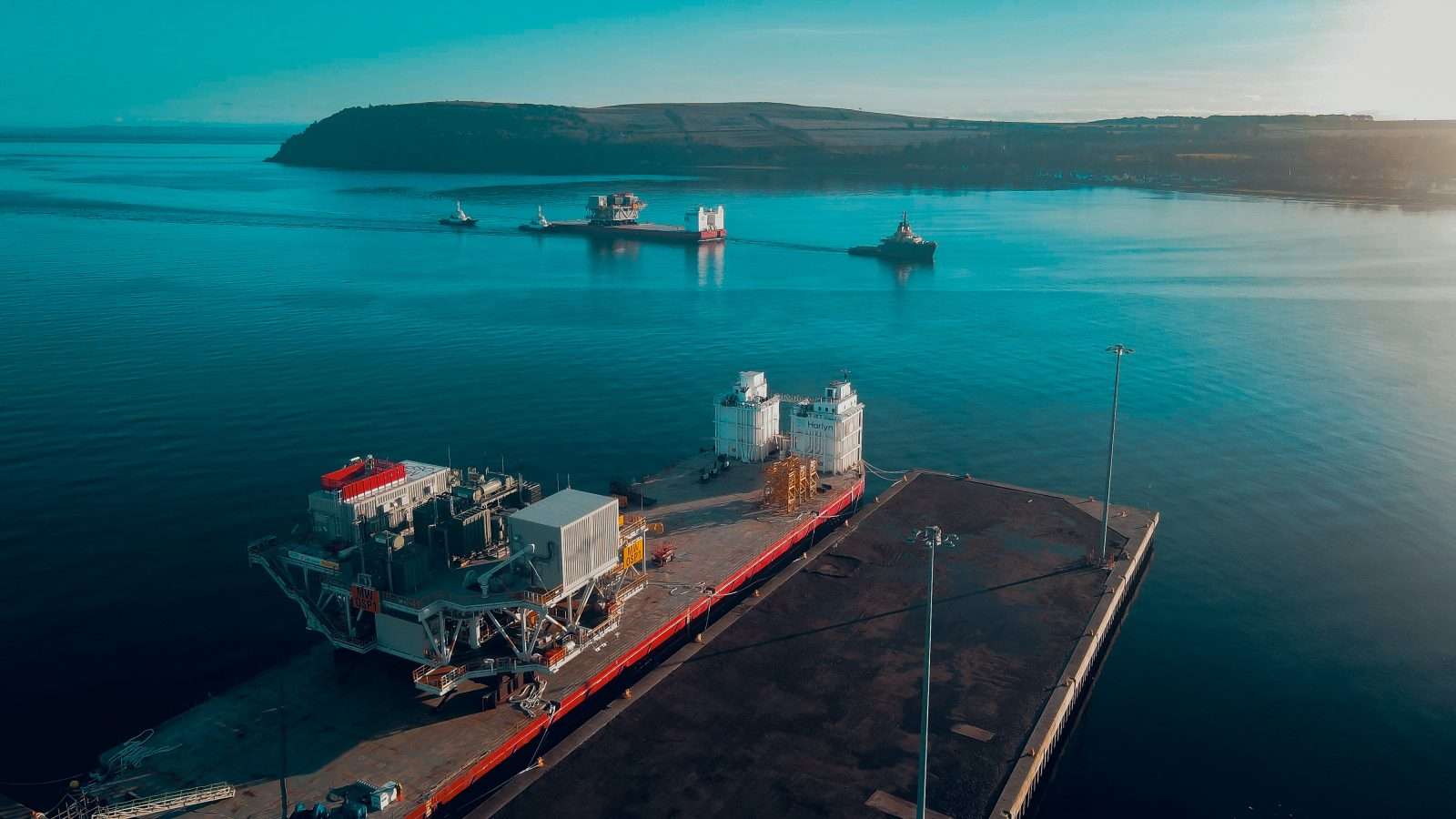
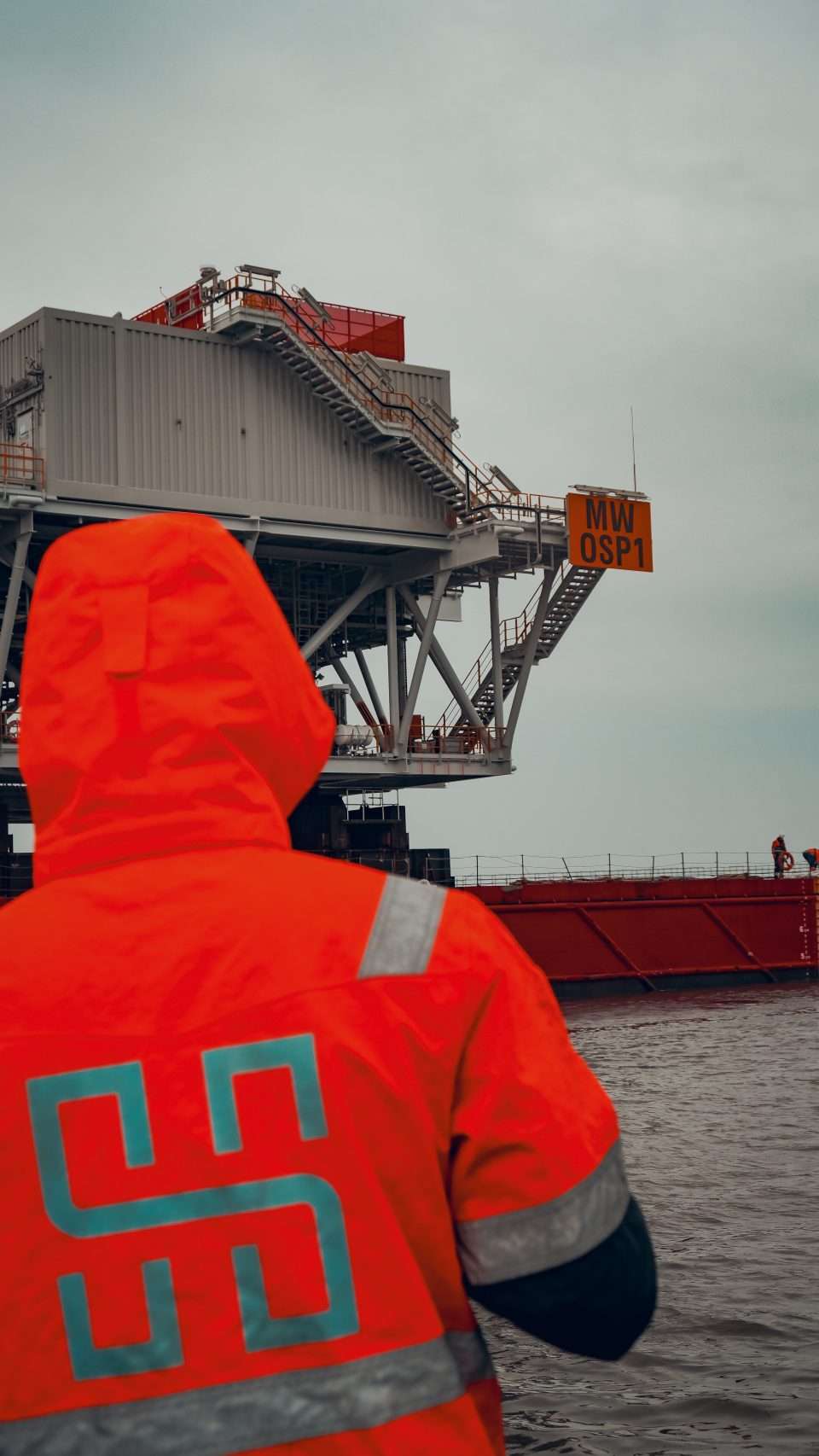
(OSPs) around 300 miles from the fabricator in Newcastle to the Port of Nigg in Scotland. Our role was to transfer the OSPs to Bokalift 1 for installation in the Moray West windfarm.
Why Harlyn were instructed
The client came to us because their selected installation contractor, Boskalis, were unable to collect the OSPs from the fabricator. In order to do so, Boskalis would have taken critical assets out of the field, which would have jeopardised the efficiency of the build of the windfarm.
Instead, we were able to provide the client with ‘just in time’ delivery of the OSPs to reduce the risk to both client and contractor, and give them the most efficient solution. This involved wet storage of the assets to maximise efficiency. With our approach as a one turnkey contactor, the client had a single point of contact for every part of this complex project.
The project took nine months to achieve from the start (the engineering) to finish – when we completed the offshore operations. There was close collaboration between our engineering team and the project team during the entire process. Going the extra mile, our engineers relocated from Newcastle to Scotland for the operational phase to make sure they were on hand 24/7 both on and offshore.
Having instructed Harlyn, the client and installation contractor (Boskalis) were able to focus on what they do best; building the windfarm. They could trust us to be a safe pair of hands to look after their crucial assets.
The challenges of moving OSPs
Each OSP weighs around 1400 metric tons, so a major challenge with this project was accommodating the dimensions and weight of the cargo. Perhaps the biggest challenge however, was managing the logistics to ensure ‘just in time’ delivery to the installation assets. It was imperative that we prevented any delays to the OSP critical path.
The challenge:
Mobilisation
At the start of the project, we prepared detailed risk assessments and method statements to plan the project within strict time constraints, and mitigate any unexpected challenges. The first stage was to mobilise and fit out the barges. We did this near the on-hire ports and used Harlyn’s extensive supply chain to fabricate and install guide frames, sea-fastenings and access towers. We prepared towage plans for each of the barges.
Dealing with unexpected challenges
Offshore projects like this one often involve continuous changes to the schedule. At Harlyn, we take a flexible approach to contracting, and we were able to negotiate the required extensions with the relevant charterparties.
We also had to deal with winter weather during the operations. We carried out detailed forecasts to determine the safest times to sail. But when weather made it unsafe to continue, we arranged for assistant tugs to take the barges to ports of refuge. Despite these challenges, we still delivered the cargo on schedule.
As with any complex project, it is difficult to scope every detail from the outset. During the project, we were able to pick up scope gaps as they arose. For example we rigged the spreader bars for the lifting operation, to take them away from the critical operational assets. Another role we picked along the way was prefabbing the sea-fastenings.
The solution:
Vessel and Loading
The reason we use a barge for these operations is that vessels with the necessary lift capacity to lift an OSP, generally do not have deck space to accommodate the platform itself. Instead, each OSP is floated out of the fabrication facility on a barge, direct to the wind farm site.
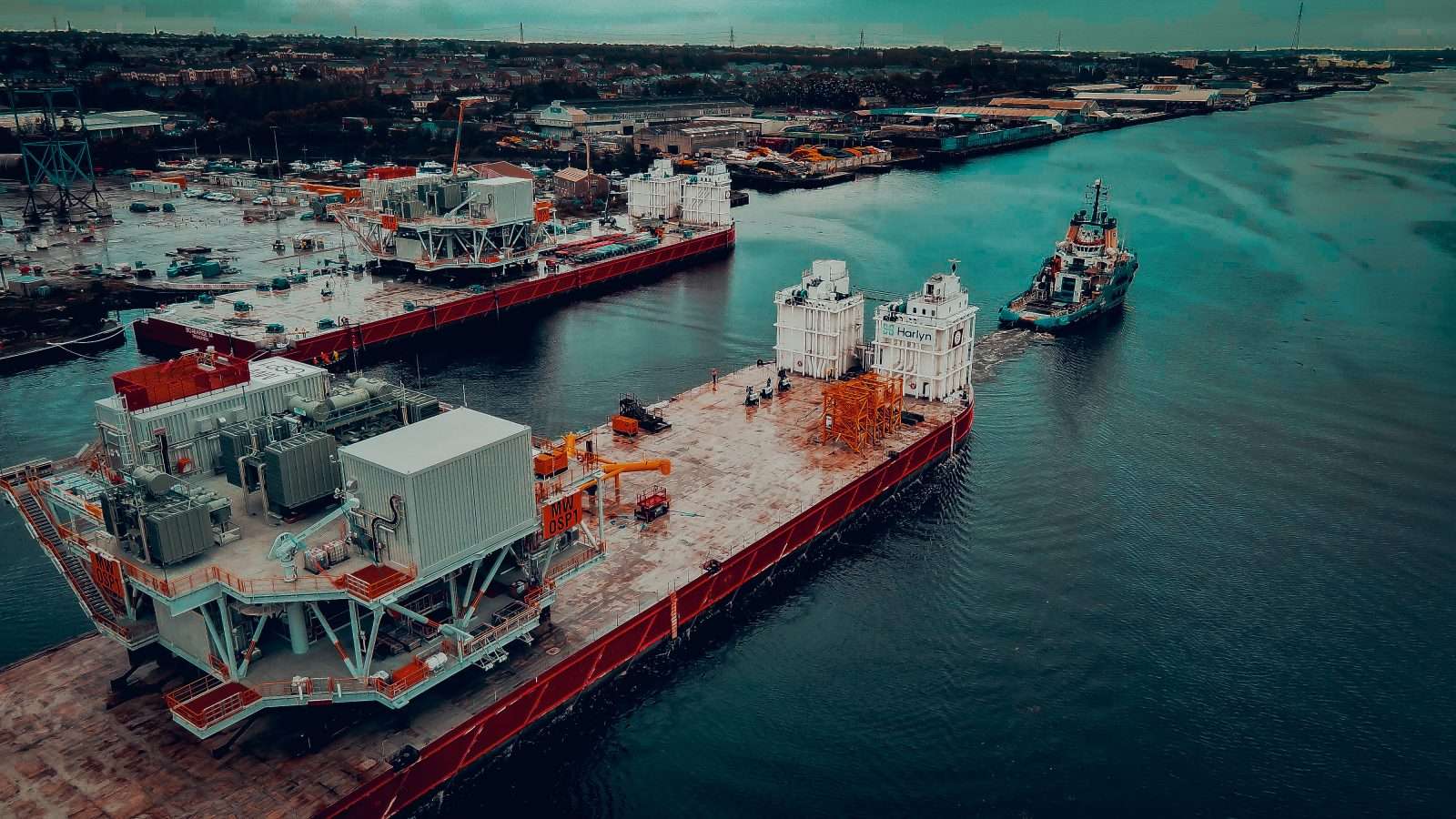
We received OSP1 onto Boa Barge 36 at Port of Tyne and OSP2 was loaded onto Boa Barge 34. The charter for both barges was arranged by our team. In fact, we chartered all the tugs, barges, and local port tugs for this project and arranged all marine activities pilotage.
Analysis
We chose these vessels based on the size of the cargo and the water depth at the quay side as well as operability for the ship to ship transfer of the OSPs.
Given the size, shape and weight of the OSPs, we had to carefully calibrate the ballast in the tanks at each stage of the voyage to maintain the vessel’s even keel, taking into account tidal variations and draft and trim changes during OSP movement operations.
We carried out quasi static mooring analysis to predict the mooring load, and investigated the deck strength with detailed finite element assessments. Our motion analysis was conducted through 3D Diffraction.
Assisted by Svitzer tugs, tug boat EDT Aeolus towed Boa Barge 36 into the Port of Nigg before utilising the same tug (to save costs) to tow Boa Barge 34 to the port.
Cleaning the monopiles
At the Port of Nigg, we performed the cleaning of the monopiles to ensure that they were sufficiently prepared for the installation of the OSPs. Cleaning monopiles is essential to the longevity of offshore wind structures as it enhances their integrity during use.
The cleaning operation has to happen as close to the installation as possible, and it forms part of the critical path of the project. That’s why we used spot market vessels to clean the piles - it was a particularly cost-effective method, which also ensured a quick turnaround. We were able to begin cleaning as soon as the installation vessel was ready to install the piles.
Installing the OSPs onto their monopiles
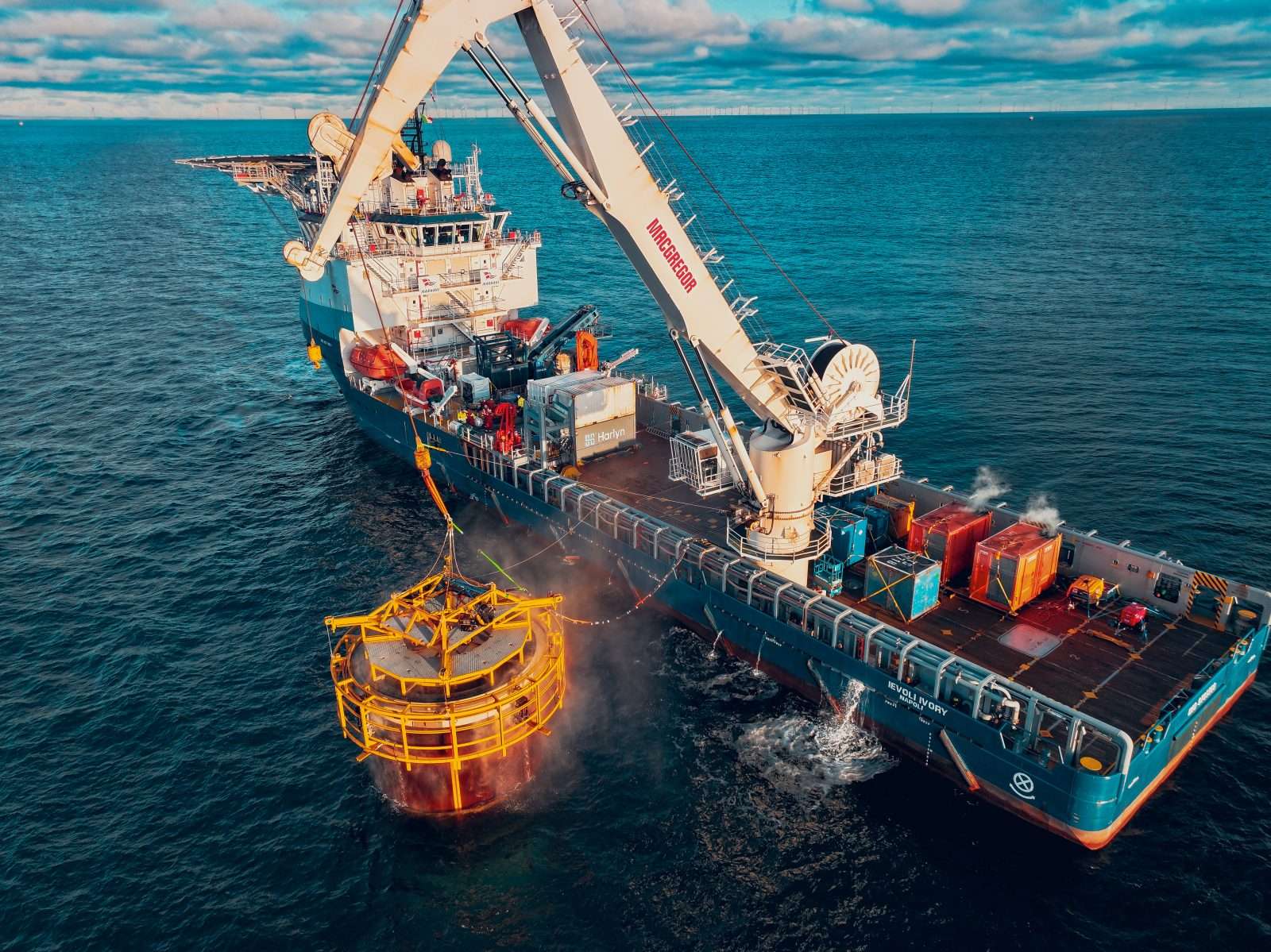
We assisted Boskalis with the transfer of the OSP to the deck of the Bokalift. Once the transfer was complete, our team went offshore to manage the sea-fastening removal in the field.
Harlyn engineers, supported by our hot works contractor, performed detailed cut procedures to remove the sea-fastenings. In order to do this efficiently, we carried out extensive calculations and trials beforehand. Having prepared thoroughly, we were able to complete the operation swiftly, inside the Contract of Affreightment window. This was critical to optimise the weather window required for the vessel.
Engineers who are on-hand when you need us
This was a challenging project that required agility in fast-evolving conditions. But we really enjoyed finding engineering-led solutions to make it happen. Harlyn’s skills in engineering, operational planning and project management meant that we were ideally placed to perform the scope which had shifting parameters and time scales.
Challenges are plentiful in projects like this and we are the sorts of people who enjoy change and challenges. We make the most of opportunities for our clients across the project. We used our engineering expertise throughout the project and we became a sounding board for various operations. We were flexible when we needed to be, and supported wider scopes to achieve the objective collaboratively.
We plan to complete many more projects like these in the future and continue our commitment to sustainable energy projects.
Outcome
The Future for Harlyn
We plan to complete many more projects like these in the future and continue our commitment to sustainable energy projects.
Pete Geddes Project Director
“Harlyn have provided an excellent contribution to the Moray West project. Harlyn’s commitment to safety and efficiency has been exemplary, and together with a flexible approach to project needs have ensured a seamless and successful execution of the scope. Their expertise has been an invaluable asset to the project’s progress.”
Moray West
Engineering-led transportation
in action.

Incredible Solutions Supporting Incredible Creations
Engineering-led solutions to support your incredible creations.
View case study
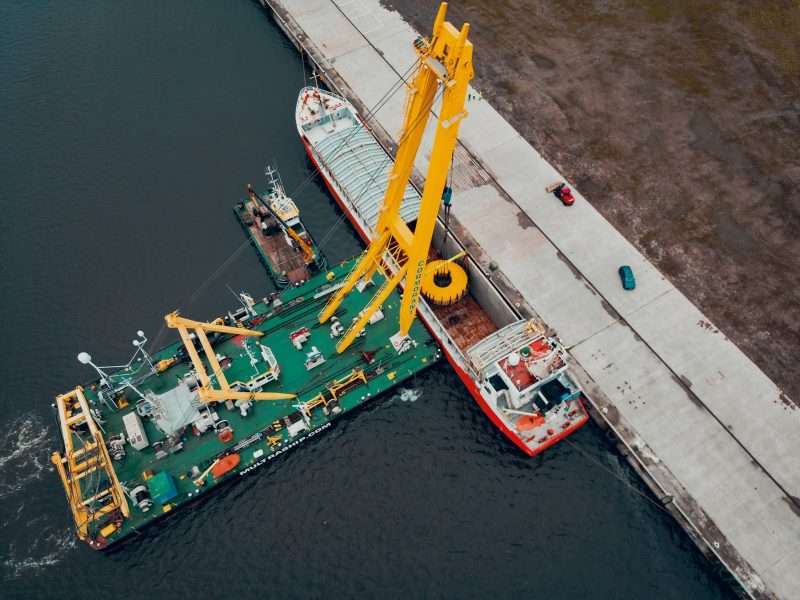
Moving two 180 tonne Fibre Optic Cables
Harlyn Solutions was appointed by Sumitomo Electric Corporation to manage the transport and handling of two fibre optic cables from Sweden to Pembrokeshire, Wales, for offshore installation. Our team developed the vessel loading solution, coordinated onshore and offshore operations, and managed the return, spooling, and transport of remaining cable and equipment — delivering a smooth, efficient end-to-end operation.
View case study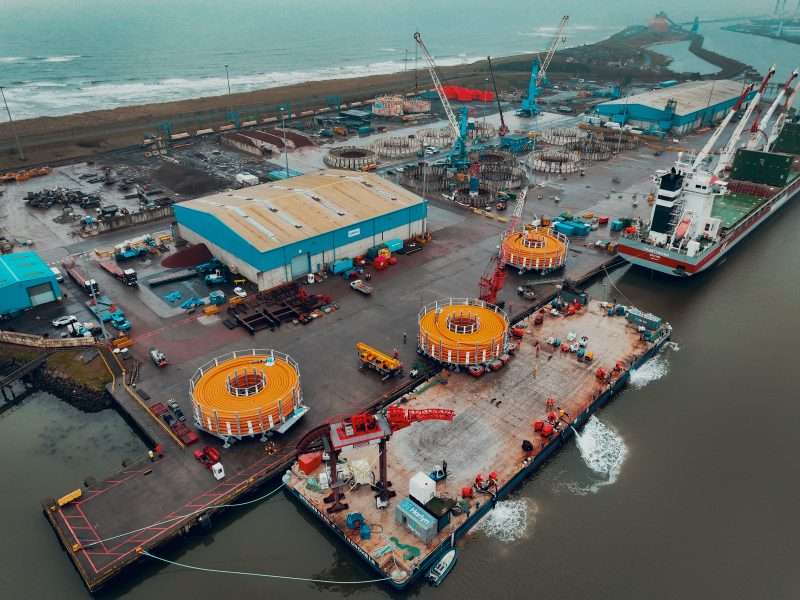
Spooling Flexible Flowlines
Harlyn Solutions developed a world-first engineering solution to supply two 14 km flexible flowlines for a subsea development project, tying back seven wells and subsea trees. Our team safely spooled the flowlines onto barge baskets, enabling the client to continue production of the next 4,500 tonnes of piping efficiently.
View case study